At 130 years old, Pleasure Beach Blackpool is known for its seaside amusement park setting, wooden roller coasters, the Big One and its shows. Its retail operation is less visible, but according to head of retail Damian Jackson it is treated as a core part of the guest experience rather than a souvenir stall at the exit. Its flagship shop sits at the main entrance in the Casino building, supported by outlets across the site.
Jackson oversees stores, e-commerce, ride photography and merchandise development. He describes a process that joins creative and commercial work: concept development for a new attraction range on one day, sales performance, stock availability, pricing and presentation on another. He works with Amanda Thompson from initial idea through design brief, product development, sampling and final approval. The stated aim is to turn the resort's history and personality into products that guests want to take home, with each range given a reason to exist, a defined customer and a connection to the park.
Segmentation before product selection
Pleasure Beach serves a diverse audience in the same day: families on a first visit, school groups with limited spending money, teenage friends and couples, international tourists, lifelong fans and serious coaster enthusiasts. Their reasons for buying also differ. A family may want a traditional souvenir of the day, while an enthusiast may look for an accurate collectable tied to a particular attraction. Teenagers may respond to confectionery, accessories and trend-led apparel, while a heritage audience may value nostalgia, craftsmanship and the stories behind the resort.
Jackson says a single approach to merchandise would not be enough. The team combines sales reports with time in shops, conversations with staff and guest feedback. It asks whether a product would be worn away from the resort, displayed with pride by an enthusiast, welcomed by a child or genuinely remind a family of its visit. Those questions shape a portfolio organized by customer mission, price point and level of engagement.
The range includes impulse purchases such as confectionery, magnets, keyrings and badges; practical products such as bottles, bags and ponchos; fashion-led apparel and accessories; children's products and plush; and premium or limited-edition pieces for collectors. Attraction-specific merchandise sits alongside broader Pleasure Beach branding, licensed ranges, playful products and heritage collections. Jackson says having something for everyone does not mean unlimited choice. It means an edited range in which each product has a purpose, a target customer and an appropriate price.
Retail brought into attraction development
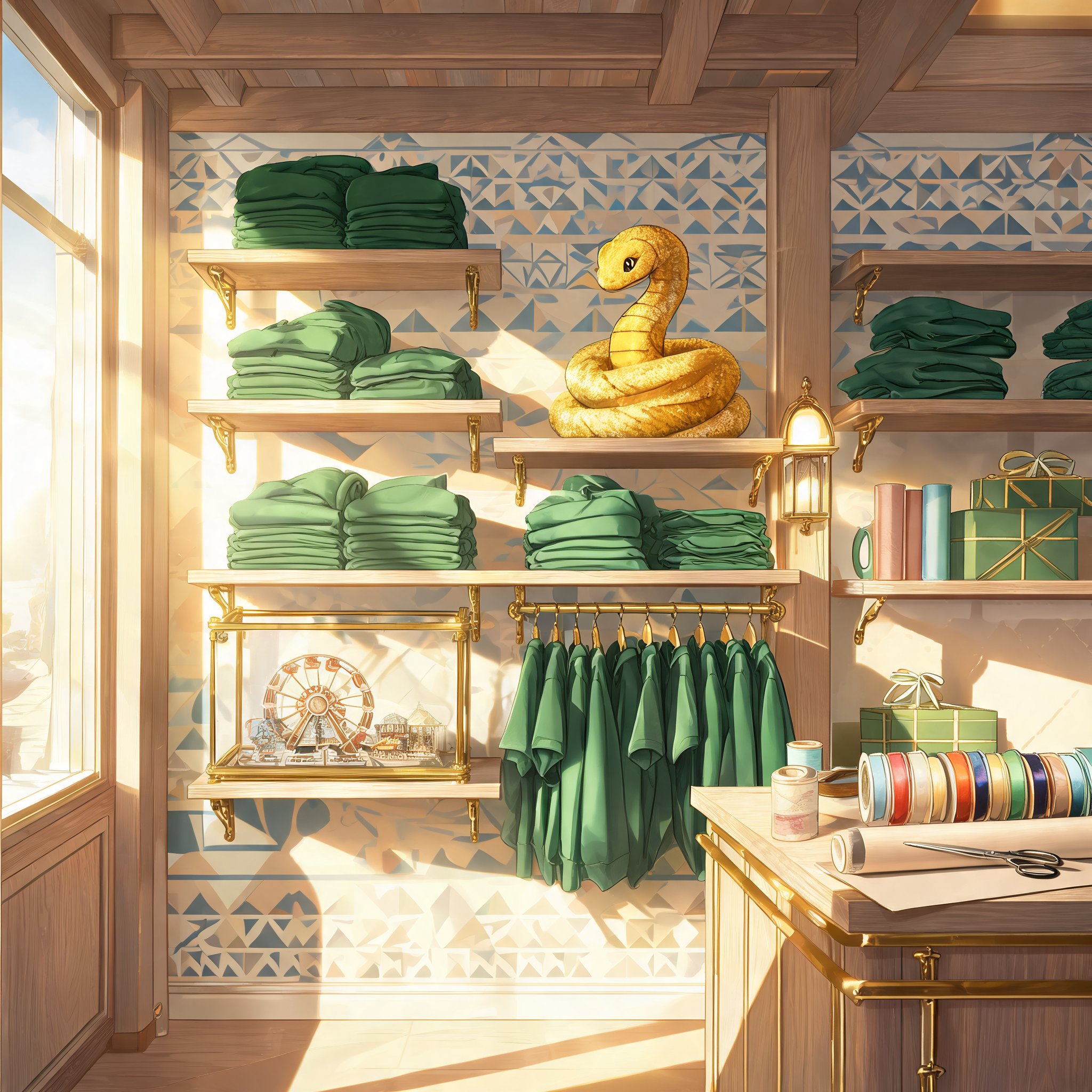
The Aviktas range is presented as an example of developing merchandise alongside a new attraction's identity. Instead of treating it as a set of products carrying a ride logo, the team built the range around the attraction's visual world: its golden snake, emerald colouring, mythology and sense of mystery. Jackson says retail involvement early in attraction development is stronger than adding merchandise after everything else is complete. He also points to a run of 50 models priced at £250 each that sold out, which he presents as evidence that premium limited-edition collectables can find a market when they have authenticity, detail and a strong connection to the attraction.
The creative process begins with discussion of the attraction, its audience and the opportunity for a range. The team considers story, visual identity, emotional impact, fashion relevance and long-term importance within the wider Pleasure Beach portfolio. ICON lends itself to a clean, contemporary and fashion-led treatment. Heritage attractions such as the Big Dipper and Grand National allow the team to draw on archive artwork, engineering details, nostalgia and generations of guest memories. Materials, colours, proportions, trims, embroidery, packaging and shop presentation are considered alongside commercial fundamentals: intended customer, expected demand, price points, production quantities, lead times and sales locations. The final product must be creatively distinctive but also commercially viable.
Heritage, licensing and exclusivity
Nostalgia matters because Pleasure Beach is representing generations of memories, not only selling products. The resort's archive of attraction imagery, typography, posters, architecture and stories can be reinterpreted for modern audiences through contemporary apparel, homeware and collectables. Jackson says the aim is not to make everything feel old-fashioned but to use authentic history in a fresh and desirable way. Playful assets are also part of the mix: humour, colour, character and unexpected ideas broaden the portfolio and engage children, families and casual visitors.
Licensed brands such as Nickelodeon and Aardman's Wallace and Gromit require partnership between the resort, the IP owner and approved suppliers. Jackson says the strongest partnerships are collaborative: the licensor protects the integrity of the brand, while the operator explains what visitors respond to and how products need to work within an attraction environment. To compete with general online retailers, Pleasure Beach seeks relevance and exclusivity through exclusive designs, attraction references, location-specific details, personalisation or products that celebrate the visit itself.
Jackson says guests increasingly ask for products that feel exclusive, authentic and considered. Demand is growing for attraction-specific merchandise, premium apparel, subtle branding, collectables, limited editions and items with a clear story. Guests also want merchandise they can use or wear beyond the visit, such as a well-designed hoodie, cap, bottle or bag that works as an attractive product in its own right. Enthusiasts are particularly interested in accurate details, models, technical artwork and products that recognize the history or engineering of an attraction. Generic souvenirs and heavily branded products without an additional story have become less compelling, although keyrings, magnets, mugs and confectionery remain important and must evolve in design, quality and presentation.
Operations and experience
Stock accuracy and product availability are described as the least glamorous and most critical parts of the operation. A strong product cannot generate revenue if it is sitting in a stockroom, has not been reordered, is incorrectly priced or is unavailable where guests expect to find it. The basics include accurate deliveries, stock movement, replenishment, pricing, signage and daily compliance checks. Clear pricing builds trust, good housekeeping makes products more desirable and effective replenishment prevents missed purchases. Jackson says retail success is often created through many small tasks completed correctly and consistently every day.
Suppliers are viewed as creative and commercial partners rather than simply manufacturers. Pleasure Beach shares the story, ambition and intended customer behind a range so suppliers understand what the team is trying to achieve. Reliability matters across quality, communication, lead times, compliance, pricing and consistency.
To encourage spending, Jackson points first to products that guests genuinely want. Presentation, location, storytelling, pricing and the confidence of the team then influence the decision to buy. Price architecture lets guests enter a range at different levels, from a small memento to a premium collectable. Trade-up is shown through better materials, greater detail, exclusivity, personalisation or a complete bundle. Product adjacencies also matter: a plush character may lead to an outfit, a ride photograph to a frame or multi-photo offer, and attraction apparel to matching accessories and collectables.
Retail should feel like another chapter of the day rather than an obligatory gift shop at the exit. That means considering retail during the planning of attractions, events and guest journeys. Themed environments, product demonstrations, characterful displays, confectionery experiences, personalisation, ride photography and interactive selling can make shopping entertaining. Retail spaces should reflect their location: a shop connected to a major thrill ride should feel different from a children's character store, a heritage collection or a confectionery outlet. E-commerce extends the relationship year-round, supports new launches, reconnects previous visitors and serves customers who cannot travel to Blackpool; it also provides insight into demand. Staff are described as hosts, storytellers and brand ambassadors rather than only transaction processors. Gift wrapping and personalisation are positioned as services for purchases that feel personal and cannot be replicated on a general marketplace.
Jackson cites museums, heritage destinations, premium fashion brands, department stores and experiential retailers as sources of inspiration. He stresses that inspiration is not imitation. Pleasure Beach aims to develop products and concepts that guests associate specifically with the resort.
What the approach shows, and what it does not
The account shows a leisure operator treating retail as a design and operations discipline. Segmentation shapes the range; early involvement gives merchandise a stronger link to an attraction's visual world; exclusivity and personalisation differentiate the offer from generic online retail; and stock accuracy protects the guest experience. These are management arguments rather than independent performance findings. The interview does not disclose sales, footfall, conversion rates or the financial contribution of retail, so the commercial impact of the strategy cannot be quantified from the material provided. It also describes one resort's approach rather than a sector-wide benchmark. What it does make clear is that Pleasure Beach does not see a logo as a sufficient product idea. The stated test is whether an item has a purpose, a customer and a connection to the visit, and whether the operation can put it in front of the right guest at the right time.